
West Bromwich Albion’s Three Degrees: The Story of Cunningham, Regis & Batson
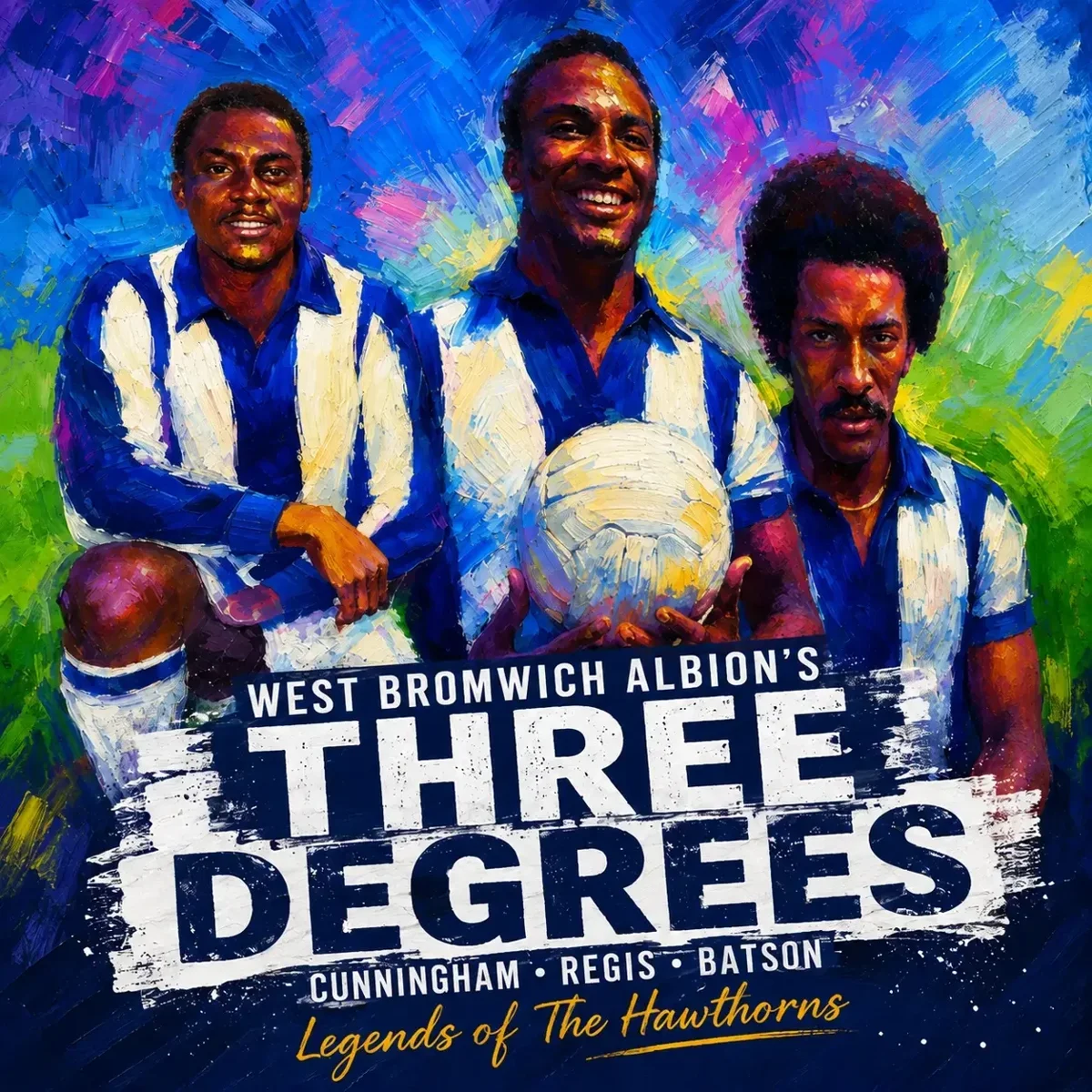
West Bromwich Albion’s Three Degrees: The Story of Three Football Pioneers
There are some football teams that are remembered because they won trophies. Others are remembered because they played beautiful football, produced unforgettable players or created moments that live forever in supporters’ memories.
Then there are teams that changed football itself.
For West Bromwich Albion, the late 1970s produced one of those rare stories.
Laurie Cunningham, Cyrille Regis and Brendon Batson became known affectionately as The Three Degrees. Together at The Hawthorns, they formed part of a hugely talented Albion side that played exciting, attacking football and challenged the established order of English football.
But their importance went far beyond results and league tables.
At a time when racism remained an ugly and deeply entrenched part of English society and football, the Three Degrees stood out through their ability, character and determination. Their performances helped challenge prejudices about Black footballers and inspired generations who followed.
Today, their story remains one of the most important chapters in the history of West Bromwich Albion football.
Who Were West Bromwich Albion’s Three Degrees?
The Three Degrees were:
- Laurie Cunningham – an exceptionally gifted winger renowned for his skill, balance, pace and elegance.
- Cyrille Regis – a powerful, athletic and prolific striker who became one of the most respected forwards of his generation.
- Brendon Batson – an intelligent and accomplished full-back whose calmness and consistency complemented the other two.
Cunningham and Regis had arrived at West Bromwich Albion before Batson, who followed manager Ron Atkinson from Cambridge United in 1978.
It was the combination of the three that created something genuinely unusual for the era.
The nickname “The Three Degrees” was coined by Ron Atkinson, drawing inspiration from the popular American soul group of the same name.
The name stuck.
More importantly, so did the football.
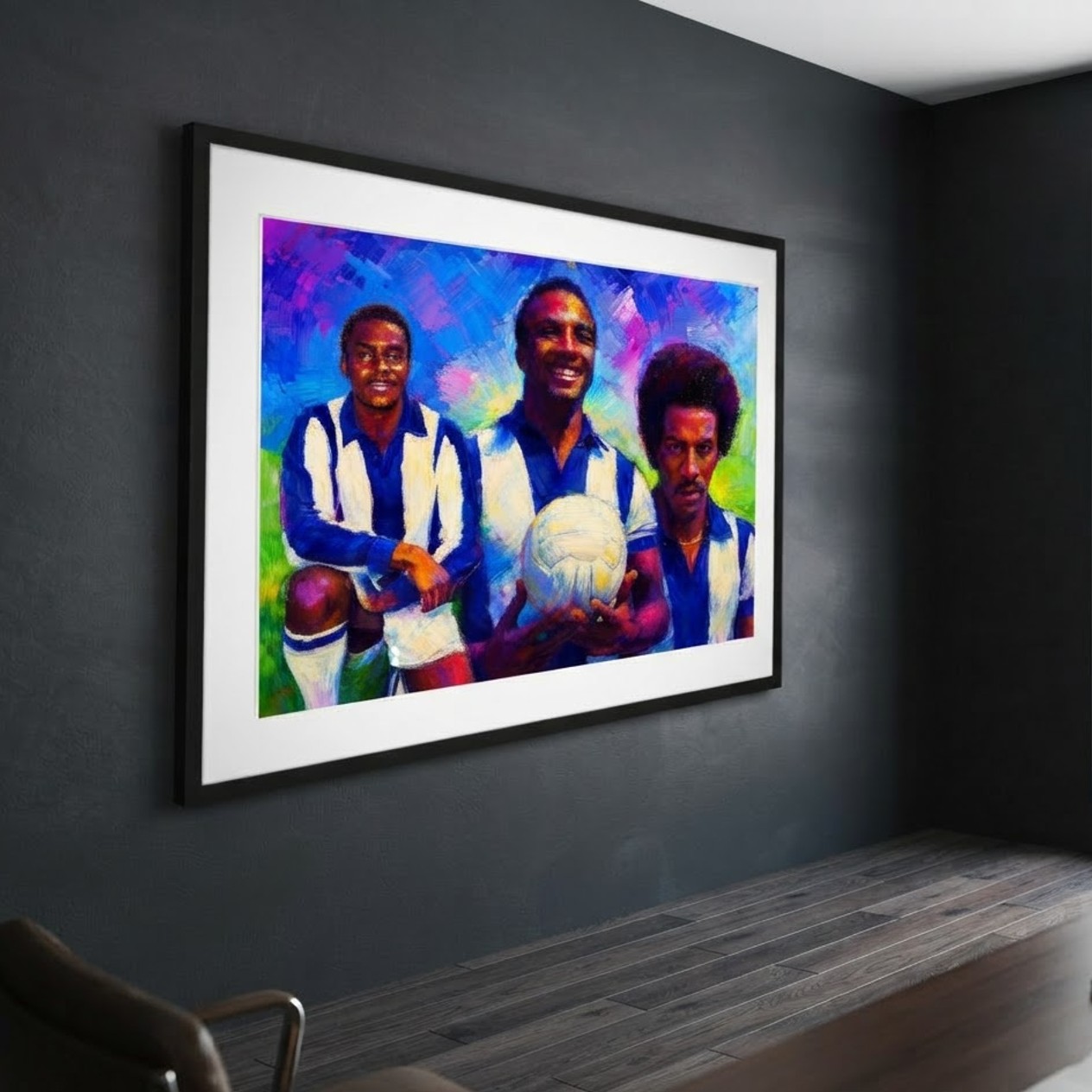
Laurie Cunningham: The Magician
Laurie Cunningham was a footballer who seemed to operate at a different speed to everyone around him.
Born in London in 1956, Cunningham had already shown considerable promise before joining West Bromwich Albion from Leyton Orient in 1977.
At The Hawthorns, however, his reputation really began to grow.
His game was built around technique and imagination. He could glide past defenders, change direction in an instant and make difficult skills look effortless.
For supporters watching from the stands, Cunningham could be mesmerising.
He was also breaking down perceptions of what a Black footballer was supposed to look like or how he was expected to play. Instead of conforming to the crude stereotypes of the period, he became celebrated for his sophistication, intelligence and extraordinary natural ability.
His performances eventually attracted the attention of Real Madrid.
In 1979, Cunningham became the first British player to sign for the Spanish giants during the modern era, a remarkable achievement that demonstrated just how highly his ability was regarded.
But for West Brom supporters, his greatest memories remain rooted in those extraordinary seasons at The Hawthorns.
Cyrille Regis: Power, Pace and Personality
If Cunningham brought artistry, Cyrille Regis brought power.
Regis arrived at West Bromwich Albion from non-League football via Aylesbury United and quickly established himself as one of English football's most exciting young forwards.
Strong, quick and difficult to contain, he possessed the physical attributes to trouble virtually any defence.
But there was much more to Regis than strength.
He had excellent movement, a powerful shot and the confidence to take on defenders. He quickly became a favourite with Albion supporters and an important part of Ron Atkinson's developing side.
Regis also became a trailblazer away from club football.
His performances eventually earned him international recognition with England, and he became one of the prominent Black English footballers of his generation.
For West Brom fans, though, he was simply Cyrille – an outstanding striker who represented everything exciting about the Albion team of the late 1970s.
Brendon Batson: The Calm at the Back
Brendon Batson perhaps received less attention than Cunningham and Regis, but his contribution to the Three Degrees should never be underestimated.
Batson was an intelligent, technically capable full-back who had already worked with Ron Atkinson at Cambridge United.
When Atkinson took charge at West Bromwich Albion in 1978, he brought Batson with him.
The move completed the trio.
Batson's composure and football intelligence gave the side balance. While Cunningham could create magic on the wing and Regis could terrorise defenders, Batson provided reliability and quality from the back.
His career is also significant because of what happened after his playing days.
Batson later became involved in football administration and was a prominent figure in the Professional Footballers' Association, continuing his contribution to the sport away from the pitch.
The Three Degrees were therefore more than three famous players.
They represented three different footballing qualities that fitted together beautifully.
The 1978–79 West Bromwich Albion Team
The Three Degrees became synonymous with the Albion side assembled by Ron Atkinson, but it is important to remember that they were part of a very good team rather than a team built around three players alone.
The squad included outstanding footballers such as Tony Brown, Bryan Robson, Ally Robertson and Derek Statham, among others.
The result was one of the most exciting West Bromwich Albion teams of the modern era.
The 1978–79 campaign became particularly memorable.
Albion finished third in the First Division, their highest league finish for more than two decades, behind Liverpool and Nottingham Forest. They also enjoyed a superb run in the UEFA Cup, reaching the quarter-finals.
For supporters, it was a season filled with attacking football, memorable performances and the feeling that something special was happening at The Hawthorns.
The Famous 5–3 Victory at Manchester United
Few matches capture the excitement of the Three Degrees era better than West Bromwich Albion's extraordinary 5–3 victory over Manchester United at Old Trafford on 30 December 1978.
Albion went to one of English football's most intimidating stadiums and produced a performance that remains firmly embedded in the club's history.
The match finished 3–3 at half-time before Albion pulled away in the second half.
Cunningham and Regis both found the net, while Tony Brown scored twice and Roberto? — no: John Wile? The remaining Albion goalscorer was John Trewick, making the final score 5–3.
The match was not simply memorable because of the scoreline.
It demonstrated that West Bromwich Albion could go toe-to-toe with one of the country's biggest clubs while playing ambitious, attacking football.
For Cunningham, Regis and Batson, it was another opportunity to show what they could do on one of English football's biggest stages.
The victory has subsequently become one of the defining matches of the Three Degrees era.
More Than Football
The achievements of Cunningham, Regis and Batson need to be understood in the context of the time.
English football in the 1970s was a very different environment.
Racist abuse was commonplace. Black players faced hostility from sections of opposition supporters and, at times, from within the wider football culture.
The Three Degrees experienced racism that no footballer should ever have had to endure.
Yet they continued to perform.
They did not simply survive in English football; they excelled.
That distinction matters.
Every brilliant performance made it harder to sustain the prejudices that Black players were somehow less capable, less intelligent or less suited to top-level football.
The Three Degrees demonstrated the opposite.
Their talent was impossible to ignore.
West Bromwich Albion's own history recognises the trio's significance in changing attitudes towards Black footballers and their role in opening the door for future generations.
A Legacy That Reaches Far Beyond The Hawthorns
Perhaps the greatest measure of the Three Degrees' impact can be seen in the footballers who followed them.
Players such as John Barnes, Paul Ince, Ian Wright, Les Ferdinand and many others emerged into a football landscape that, while still far from perfect, had begun to change.
The Three Degrees did not single-handedly eliminate racism from football. That would be an unfair simplification.
What they did was provide an extraordinarily powerful example.
They showed young Black footballers that there was a place for them at the highest level of the English game.
Their success also made supporters sit up and take notice.
As their performances became impossible to overlook, ability increasingly became the conversation.
That is a significant part of why the Three Degrees remain so important today.
What Happened to the Three Degrees?
Sadly, their time together at West Bromwich Albion was remarkably short.
Cunningham's performances attracted the attention of Real Madrid and he moved to Spain in 1979.
His career subsequently took him to several clubs, including Real Madrid, Manchester United, Marseille, Leicester City, Rayo Vallecano and Wimbledon.
He was part of the Wimbledon side that famously won the FA Cup in 1988.
Tragically, Cunningham died in a car accident in Madrid in 1989 at just 33 years of age.
His passing robbed football of one of its most gifted and charismatic players.
Cyrille Regis continued to enjoy an outstanding career, earning England caps and representing several clubs after leaving West Bromwich Albion.
He remained a hugely respected figure within English football until his death in 2018.
Brendon Batson went on to make a significant contribution to the game through his work with the PFA and football administration.
Of the original Three Degrees, Batson is now the surviving member.
Why West Bromwich Albion’s Three Degrees Still Matter
Football has changed dramatically since the late 1970s.
The money is different. The stadiums are different. The media coverage is different. The global reach of the game is almost impossible to compare.
But some football stories become more important with time.
The story of the Three Degrees is one of them.
For West Bromwich Albion supporters, they represent a glorious period when the club played some of the most entertaining football in England.
For football historians, they represent an important moment in the changing face of the English game.
And for countless players and supporters from Black communities, their story represents something even more personal: proof that talent could break through barriers that once seemed almost impossible to overcome.
That is why Laurie Cunningham, Cyrille Regis and Brendon Batson are remembered not simply as three West Bromwich Albion players.
They are remembered as pioneers.
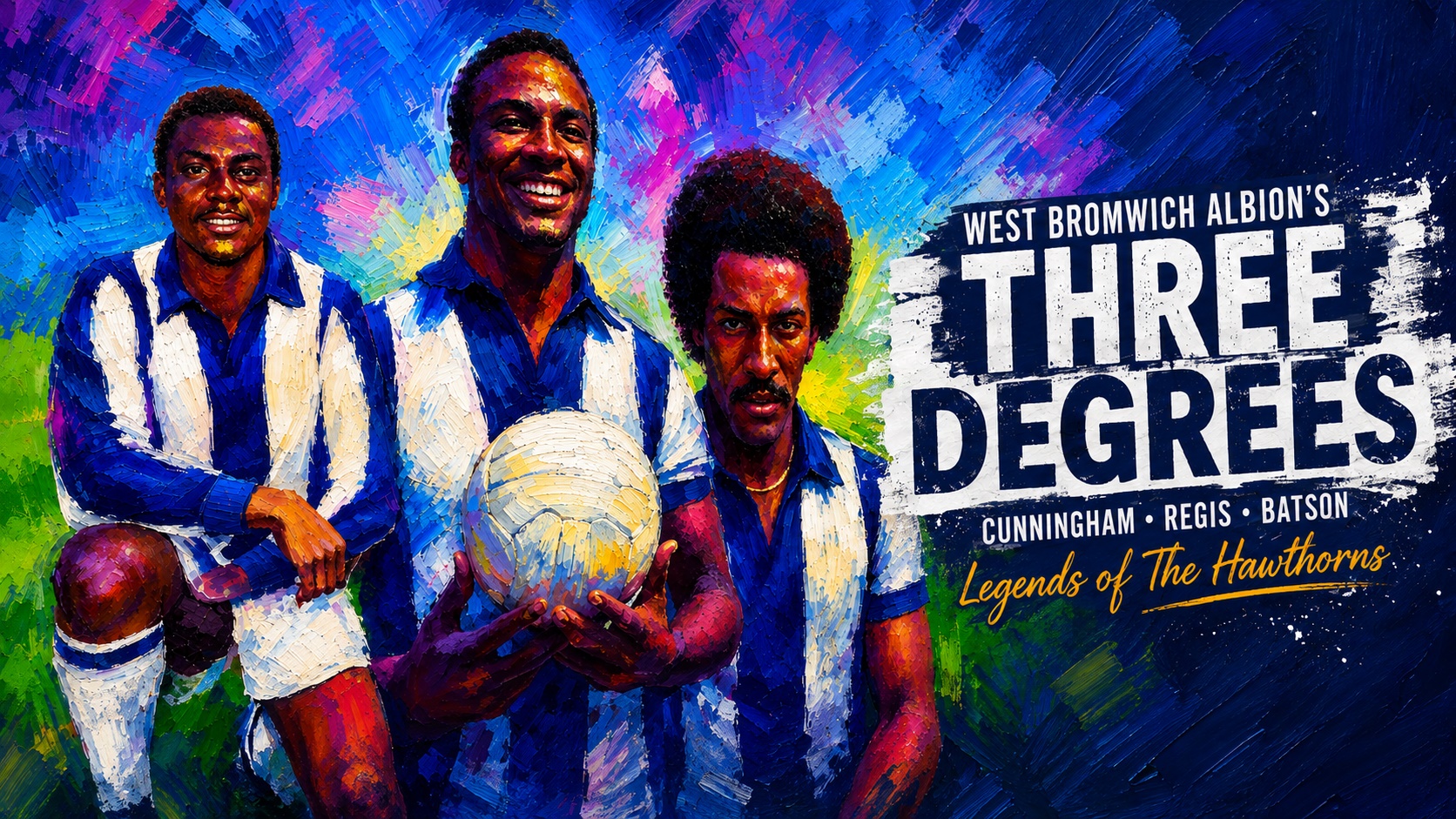
Celebrate the Three Degrees with Football Art Online
The Three Degrees remain an enduring part of West Bromwich Albion's football heritage, and their story continues to inspire artwork, memorabilia and conversations among Baggies supporters.
At Football Art Online, I've created an independently designed collection of West Brom-inspired art, gifts and clothing celebrating the club's history and iconic football culture.
If you're looking for a distinctive way to celebrate the Three Degrees era, take a look at the West Brom-inspired Art, Gifts & Clothing collection.
The range is designed for supporters who love the history, characters and memories that make football more than just 90 minutes.
You can also explore the wider Football Art Online website for football-inspired prints, gifts, clothing and artwork celebrating clubs, players, iconic moments and football culture.
Please note: products are independently designed by Football Art Online and are inspired by West Bromwich Albion, its history and football culture. They are not official or endorsed West Bromwich Albion merchandise.
The Three Degrees: A West Bromwich Albion Legacy That Will Never Be Forgotten
Laurie Cunningham.
Cyrille Regis.
Brendon Batson.
Three players. Three very different personalities and playing styles. One extraordinary chapter in West Bromwich Albion's history.
Their football was exciting. Their achievements were significant. Their influence was enormous.
But perhaps the most fitting way to remember the Three Degrees is not simply by looking at what they achieved themselves.
Look instead at everyone who followed.
Every Black footballer who walked onto an English football pitch with greater opportunity than the generation before them owes something to the pioneers who helped change the landscape.
The Three Degrees were among those pioneers.
And for West Bromwich Albion supporters, their names will forever be associated with one of the most exciting, courageous and influential periods in the club's history.
The Three Degrees didn't just play football. They helped change it.


Thank you for posting your blog comment. It will be reviewed and set live soon. If you provided your email then you will be notified of replies to this comment.