
Goldstone Ground History: Brighton’s Lost Football Home
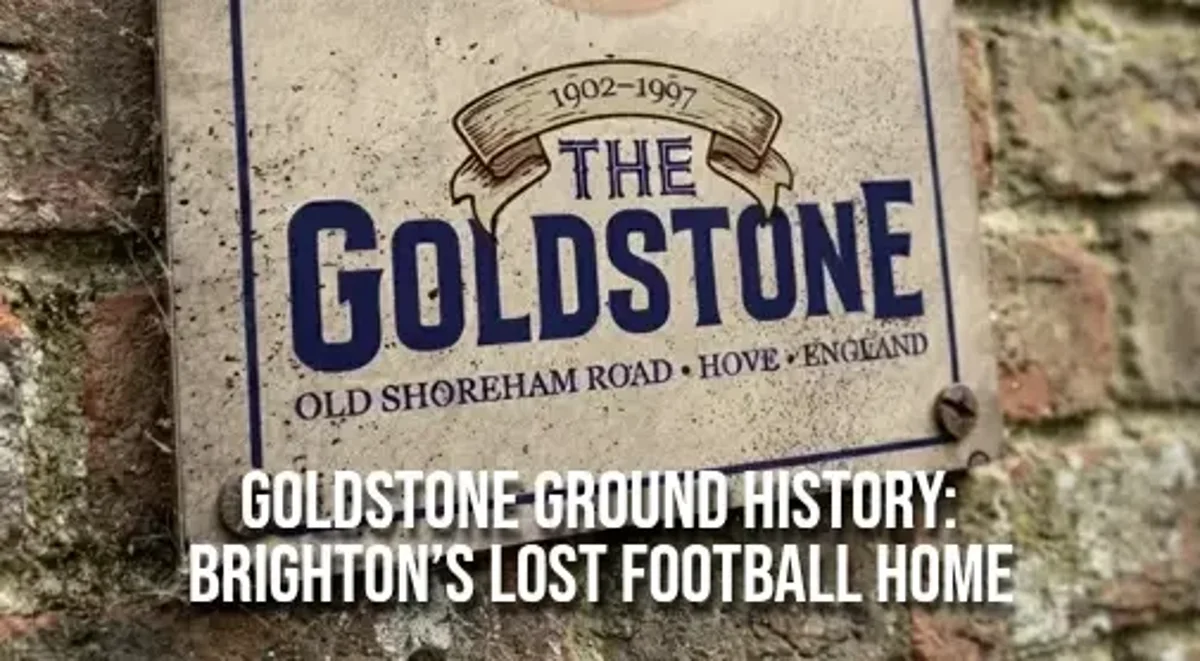
The Goldstone Ground: The Rise, Fall and Unforgettable Legacy of Brighton & Hove Albion’s Former Home
Few football grounds leave such a lasting mark on a club’s identity as the Goldstone Ground. For generations of Brighton & Hove Albion supporters, it was far more than a place to watch football. It was a home, a meeting place, a source of pride and, ultimately, the setting for one of the most remarkable survival stories in English football.
Standing on Old Shoreham Road in Hove, opposite Hove Park, the Goldstone witnessed nearly a century of triumphs, heartbreak, unforgettable goals and extraordinary loyalty. Its story includes record-breaking crowds, a historic FA Cup Final, financial turmoil and a deeply emotional farewell that would shape the future of the Seagulls forever.
Today, the stadium has disappeared, replaced by modern commercial development. Yet, for those who experienced its unique atmosphere, the Goldstone Ground remains an essential part of Brighton’s footballing soul.
So, how did this famous old ground rise from humble beginnings to become one of English football’s most fondly remembered lost stadiums?
From Farmland to Football Ground: The Early Years
The Goldstone Ground’s story began in 1901, when the land formed part of the former Goldstone Farm estate. Before the turnstiles, terraces and matchday crowds arrived, the site was agricultural land used for grazing cattle.
Local businessman John Clark leased the ground and developed it for Hove Football Club. The first recorded match took place on 7 September 1901, when Hove faced Clapton.
Brighton & Hove Albion soon entered the picture. Having encountered difficulties using their usual playing venue, the club arranged to play a friendly at the Goldstone on 22 February 1902. Albion won an entertaining encounter against Southampton Wanderers by an emphatic 7–1 scoreline.
It proved to be an important moment in the ground’s history.
For the 1902–03 season, Brighton moved to the Goldstone, initially sharing the venue with Hove FC. When Hove departed in 1904, Albion became the ground’s sole football tenant.
What followed was a relationship lasting 95 years, turning a modest sporting venue into the spiritual home of a growing football community.
Building a Stadium for the Seagulls
The early Goldstone was a far cry from the grounds supporters would recognise in later decades. Its facilities were relatively basic, but the club gradually invested in improvements as attendances grew.
New stands, covered accommodation, improved entrances and expanded terracing transformed the venue. Supporters also played an important role in its development, helping finance improvements that would benefit generations of fans.
The ground continued evolving throughout the first half of the twentieth century. During the First World War, the site was used for a rifle range, while rugby matches helped raise money for wartime relief. Football eventually returned, and renovation work restored the stadium to matchday use.
The Second World War brought further disruption. In 1942, a German bomb exploded near the North Stand, damaging its roof and supporting structure. The blast also damaged windows in the West Stand and scattered debris across the pitch.
Despite these setbacks, the Goldstone survived. Post-war reconstruction, new terracing and additional spectator facilities helped accommodate the growing crowds of the following decades.
It was a stadium built through gradual change rather than a single grand design, and that gave it much of its distinctive character.
1958: The Goldstone’s Record-Breaking Afternoon
One date stands above all others when discussing the Goldstone’s attendance record.
On 27 December 1958, Brighton welcomed Fulham for a Second Division fixture. The Seagulls produced a memorable performance, winning 3–0 in front of an astonishing 36,747 spectators.
That remains the ground’s record attendance.
The occasion arrived during an exciting period for the club. Brighton had won the Third Division South championship in the previous season and were now competing in the Second Division, with crowds reflecting the growing enthusiasm surrounding the team.
Imagine the scene: packed terraces, supporters squeezed shoulder to shoulder, the roar of the crowd rolling across Hove and thousands of voices celebrating every tackle, pass and goal.
For modern football supporters accustomed to all-seater stadiums, the numbers are remarkable. At its peak, the Goldstone could accommodate crowds far larger than its eventual closing capacity of 18,203.
It was a different era of football, when standing on the terraces was central to the matchday experience and the connection between supporters and players felt wonderfully immediate.
From Division Three to the FA Cup Final
The Goldstone witnessed Brighton’s rise through the Football League, including the club’s progression into the top flight and its extraordinary FA Cup adventure of 1982–83.
Under manager Jimmy Melia, Brighton reached the FA Cup Final at Wembley, facing Manchester United on 21 May 1983.
It was an incredible achievement for a club that had spent much of its history outside English football’s elite.
The final itself became part of football folklore. Gordon Smith appeared to have a golden opportunity to win the cup for Brighton in extra time, only for Manchester United goalkeeper Gary Bailey to make the decisive save. The match finished 2–2 before United won the replay 4–0.
Although Brighton did not lift the trophy, the journey remains one of the defining chapters in the club’s history.
For Goldstone regulars, that Wembley adventure was a reminder of what their team could achieve. The old ground was the place where supporters gathered before the journey, celebrated the victories along the way and returned with memories that would last a lifetime.
The Goldstone was not simply a backdrop to Brighton’s history. It was where the club’s identity was lived and shared, season after season.
The Sale That Changed Everything
Sadly, the Goldstone’s greatest challenge came away from the pitch.
By the mid-1990s, Brighton & Hove Albion were experiencing serious financial difficulties. The club’s future was increasingly uncertain, and in 1995 news emerged that the Goldstone Ground had been sold without supporters being properly consulted.
The announcement sparked anger, disbelief and protests among the fanbase.
For many supporters, the sale represented far more than the loss of a football stadium. It threatened the very existence of the club they had supported for years, sometimes decades. There was no secure new home waiting to welcome the Seagulls, and the prospect of leaving Brighton and Hove was devastating.
The situation became increasingly desperate. Protests grew, tensions escalated and supporters organised campaigns to save their club.
One of the most memorable initiatives was the first Fans United day in February 1997, when supporters of clubs from across the country travelled to stand alongside Brighton fans. The occasion demonstrated the remarkable solidarity that football can inspire, even between rival fanbases.
Brighton were fighting for their survival, and the Goldstone had become the focal point of that battle.
26 April 1997: The Final Goodbye
On 26 April 1997, Brighton played Doncaster Rovers in the final match at the Goldstone Ground.
The circumstances could hardly have been more dramatic. The club was battling relegation from the Football League, and victory was desperately needed to keep its survival hopes alive.
The atmosphere was emotional, with supporters knowing they were witnessing the end of an era.
Then came the moment that would forever be associated with the ground’s final afternoon.
In the 68th minute, Stuart Storer volleyed home to give Brighton a priceless 1–0 lead. It was a goal of enormous significance, lifting the crowd and giving the Seagulls renewed hope at a time when the club appeared to be staring into the abyss.
When the final whistle sounded, Brighton had won their last match at their beloved old home.
Supporters took away pieces of the ground as souvenirs, carrying home tangible reminders of a place that had meant so much to them.
But the job was not finished. Brighton still needed a result away to Hereford United in their final league fixture.
A tense 1–1 draw secured their Football League status, with Hereford suffering relegation instead. The Seagulls had survived, but the Goldstone Ground was gone.
Gillingham, Withdean and the Long Road Home
The years that followed tested Brighton supporters like few other periods in the club’s history.
With no suitable permanent home available locally, the team ground-shared at Gillingham, around 70 miles away, before returning to Brighton to play at the Withdean Stadium.
Neither arrangement could truly replace the Goldstone. Away from their traditional home, the club faced the challenge of maintaining its identity while fighting financial and sporting difficulties.
Yet supporters continued to turn up, campaign for a new stadium and believe that better days would eventually arrive.
Their determination ultimately helped secure the future of the club at Falmer, where the American Express Stadium opened in 2011.
Brighton’s subsequent rise to the Premier League and into European competition represents an extraordinary turnaround. The modern stadium is a world away from the old terraces of Hove, but its existence owes much to the resilience of those who refused to let their club disappear.
Remembering the Goldstone Ground
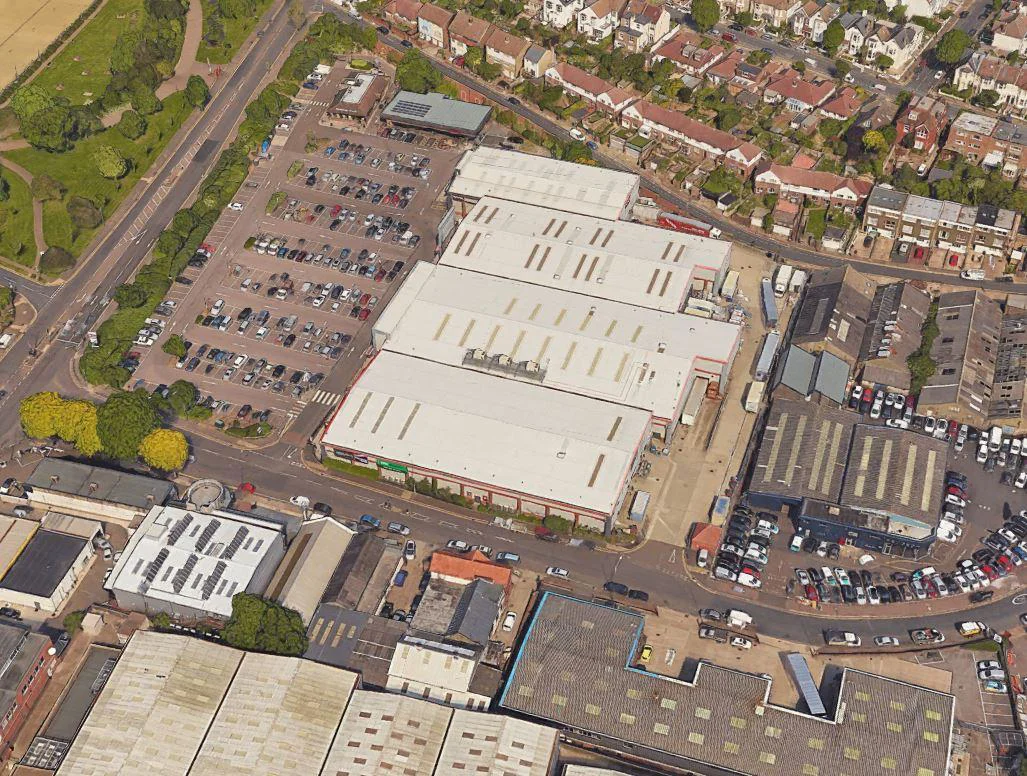
The Goldstone Ground was demolished following its closure, and its former site became a retail park. Today, it can be difficult for younger supporters to imagine the noise, excitement and emotion that once filled the ground on a Saturday afternoon.
But football grounds are never just concrete, steel, seats and grass.
They are collections of memories. They are the places where parents introduce children to their club, where friendships are formed on the terraces and where moments of sporting drama become family stories passed down through generations.
For Brighton supporters, the Goldstone represents both extraordinary highs and painful lows. It recalls the record crowd against Fulham, the journey to Wembley in 1983 and Stuart Storer’s priceless goal in 1997. Above all, it represents the spirit of a club that refused to surrender when its future was in doubt.
That enduring connection is also why football-inspired artwork can mean so much to supporters. A design celebrating a former stadium is not simply a decorative object; it is a way of keeping a personal piece of football history alive.
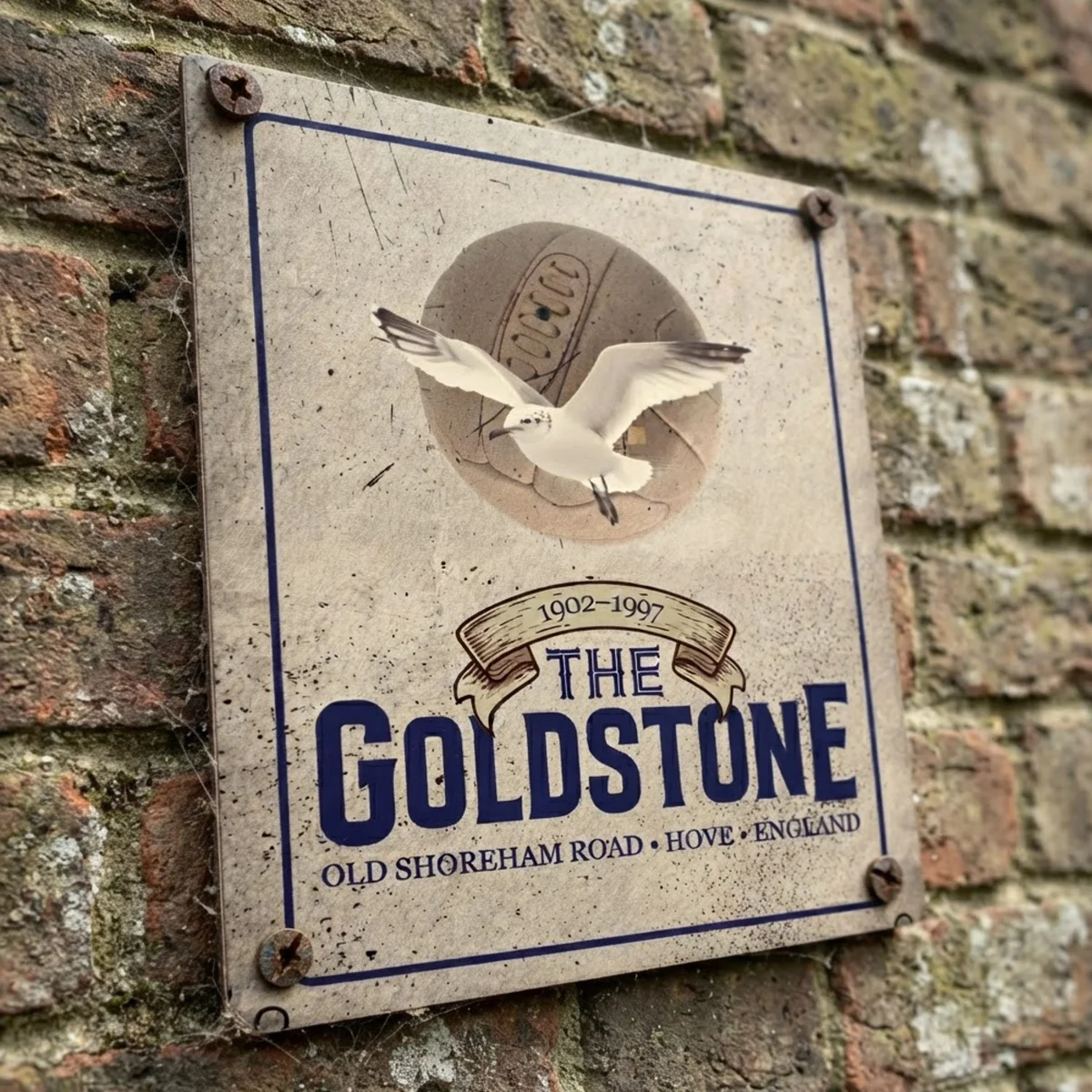
At Football Art Online, I celebrate the grounds, clubs and unforgettable moments that make the beautiful game so special. My Goldstone Ground Vintage Metal Wall Sign is designed for supporters who want to bring a little of that lost-stadium nostalgia into their home, office or football room.
You can also explore more football-inspired artwork, retro designs and gifts at Football Art Online.
The Goldstone Ground may be gone, but its place in Brighton & Hove Albion’s story is secure. Stadiums can be sold, demolished and replaced, but the memories created within their walls belong to the supporters who made them special.
And that is why, decades after the final whistle, the Goldstone still matters.


Thank you for posting your blog comment. It will be reviewed and set live soon. If you provided your email then you will be notified of replies to this comment.