
Aberdeen 1983: The Incredible European Cup Winners’ Cup Victory Over Real Madrid

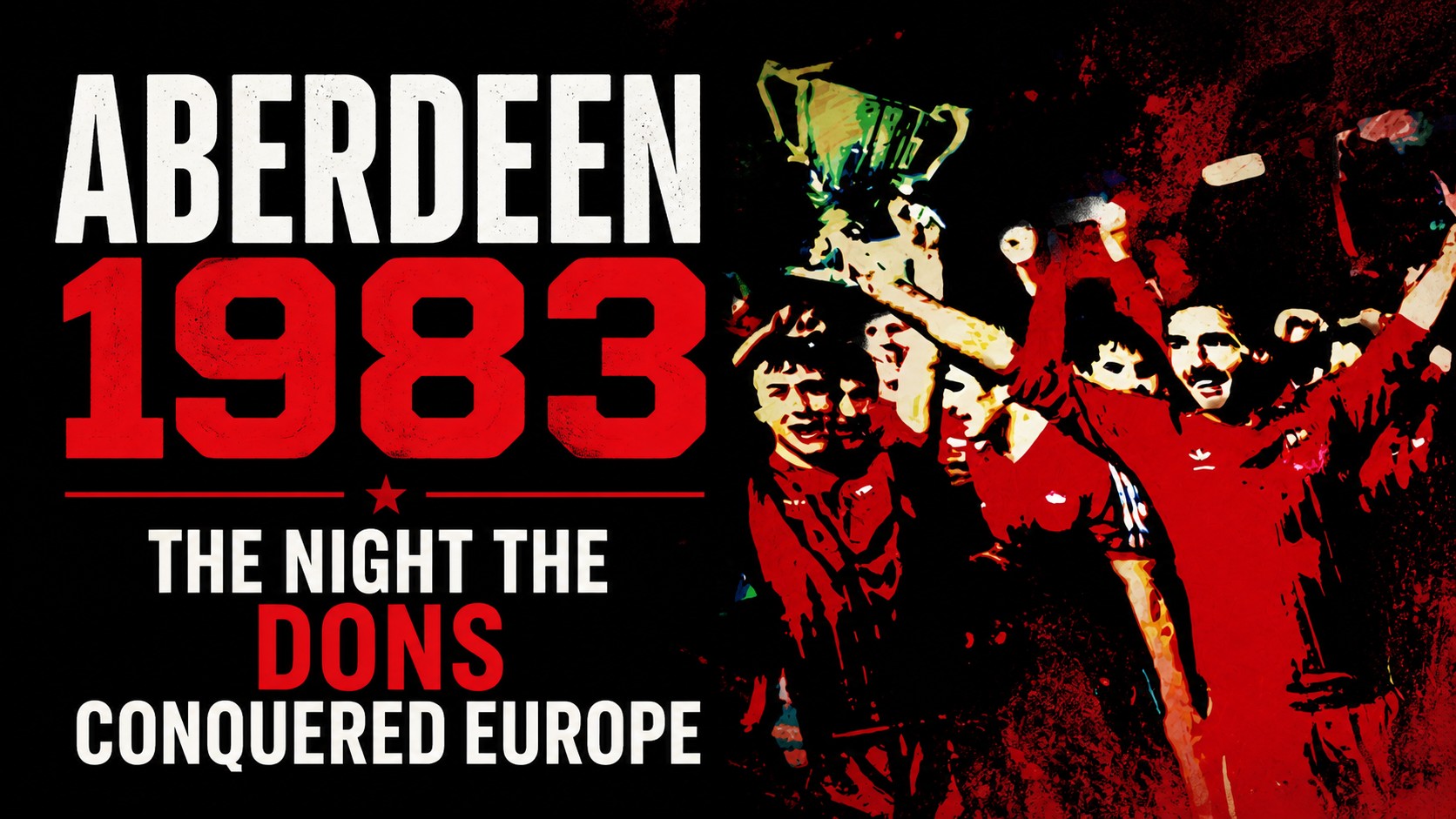
Aberdeen 1983: The Night the Dons Conquered Europe
There are some football matches that become part of a club's history.
Then there are matches that become part of football folklore.
For Aberdeen Football Club, the European Cup Winners’ Cup final of 1983 is firmly in the second category.
On 11 May 1983, in a rain-soaked Gothenburg, Aberdeen faced one of the biggest names in world football: Real Madrid. Few outside the north-east of Scotland expected the Scottish Cup holders to overcome the Spanish giants.
But this was no ordinary Aberdeen side.
Managed by a young Alex Ferguson and packed with talented, determined players, the Dons had already overcome some formidable European opposition on their way to the final.
And on that unforgettable night at the Nya Ullevi Stadium, Aberdeen produced one of the greatest European final victories in Scottish football history.
The final finished Aberdeen 2–1 Real Madrid after extra time, with Eric Black giving the Dons an early lead before Juanito equalised from the penalty spot. With the game heading towards its final stages, substitute John Hewitt became the hero, heading Aberdeen's historic winner in the 112th minute.
For Aberdeen supporters, Gothenburg 1983 would never be forgotten.
The Rise of Alex Ferguson's Aberdeen
By the early 1980s, Aberdeen had developed into a genuine force in Scottish football.
Alex Ferguson had taken charge at Pittodrie in 1978 and gradually transformed the club. His Aberdeen teams were renowned for their work rate, organisation, discipline and fierce competitive spirit.
The Dons had already won the Scottish Premier Division in 1979–80, breaking the traditional dominance of Celtic and Rangers.
They then lifted the Scottish Cup in 1982, defeating Rangers 4–1 after extra time at Hampden Park.
That victory earned Aberdeen their place in the 1982–83 European Cup Winners’ Cup.
What followed was an extraordinary European adventure.
Aberdeen's Road to the 1983 European Final
Aberdeen began their European campaign against Swiss side Sion.
The Dons made their intentions clear immediately, winning the first leg at Pittodrie 7–0 before completing an impressive 11–1 aggregate victory.
Next came Dinamo Tirana of Albania.
Aberdeen won 1–0 at home before securing a goalless draw away from home to progress 1–0 on aggregate.
The second round brought Polish side Lech Poznań.
Again, Aberdeen demonstrated their growing European maturity. They won 2–0 at Pittodrie and followed it with a 1–0 victory away from home.
The quarter-final, however, presented a completely different challenge.
Bayern Munich
Aberdeen were drawn against Bayern Munich, one of the most respected clubs in European football.
The first leg in Munich ended 0–0.
That result was hugely significant. Aberdeen had shown that they were capable of competing against one of Europe's elite sides without being overawed by the occasion.
The second leg at Pittodrie became one of the most famous matches in Aberdeen's European history.
Bayern took the lead, and when they went 2–1 ahead, Aberdeen's hopes appeared to be fading.
Instead, the Dons produced an extraordinary late comeback.
Neil Simpson equalised before Alex McLeish and John Hewitt helped Aberdeen complete a remarkable 3–2 victory, sending them into the semi-finals.
The belief was growing.
Aberdeen were no longer simply enjoying a memorable European run.
They genuinely believed they could win the competition.
The Semi-Final Against Waterschei
Belgian club Waterschei stood between Aberdeen and the final.
The first leg at Pittodrie was another statement of intent.
Aberdeen produced a stunning 5–1 victory, putting themselves firmly in control of the tie.
Although Waterschei won the second leg 1–0, Aberdeen progressed 5–2 on aggregate.
The destination was now Gothenburg.
The opponents were Real Madrid.
Aberdeen vs Real Madrid: The 1983 European Cup Winners’ Cup Final
The final took place at the Nya Ullevi Stadium in Gothenburg on 11 May 1983.
The contrast between the two clubs was striking.
Real Madrid possessed a huge European reputation and a squad containing internationally recognised players. Their manager was the legendary Alfredo Di Stéfano.
Aberdeen, meanwhile, were representing the north-east of Scotland with a team built around togetherness, determination and an unshakeable belief in their manager's methods.
The weather added another layer to the occasion.
Rain fell heavily in Gothenburg, producing difficult playing conditions.
Yet Aberdeen started brilliantly.
Eric Black strikes first
After only seven minutes, Aberdeen were ahead.
Eric Black had already threatened the Real Madrid goal early in the match, and the Dons' pressure soon paid off.
Following a Gordon Strachan corner, Alex McLeish helped the ball towards goal and Eric Black reacted quickly to put Aberdeen in front.
For the travelling Red Army, it was the dream start.
But Real Madrid were not going to surrender easily.
Juanito equalises
Just minutes later, the Spanish side were level.
A difficult back pass created danger for Aberdeen and goalkeeper Jim Leighton brought down Santillana inside the penalty area.
Juanito stepped forward and converted the resulting penalty.
The score was 1–1.
Despite further chances and pressure from both teams, neither side could find another goal during the remainder of normal time.
After 90 minutes, Aberdeen and Real Madrid were still level.
The European Cup Winners’ Cup final would require extra time.
John Hewitt Becomes a Gothenburg Legend
As extra time progressed, the rain continued to fall.
Aberdeen's players were exhausted, but they kept going.
Alex Ferguson turned to his bench and introduced John Hewitt for Eric Black in the 87th minute.
It proved to be one of the most important substitutions in Aberdeen's history.
With the match deep into extra time, Aberdeen finally found the breakthrough.
Mark McGhee delivered a cross into the Real Madrid penalty area.
John Hewitt attacked the ball.
The Aberdeen substitute threw himself towards it and headed home.
112 minutes. Aberdeen 2–1 Real Madrid.
The Dons were ahead.
They had come through the rain, the pressure and the extra time.
All that remained was to survive the final minutes.
And they did.
When the final whistle arrived, Aberdeen were European champions.
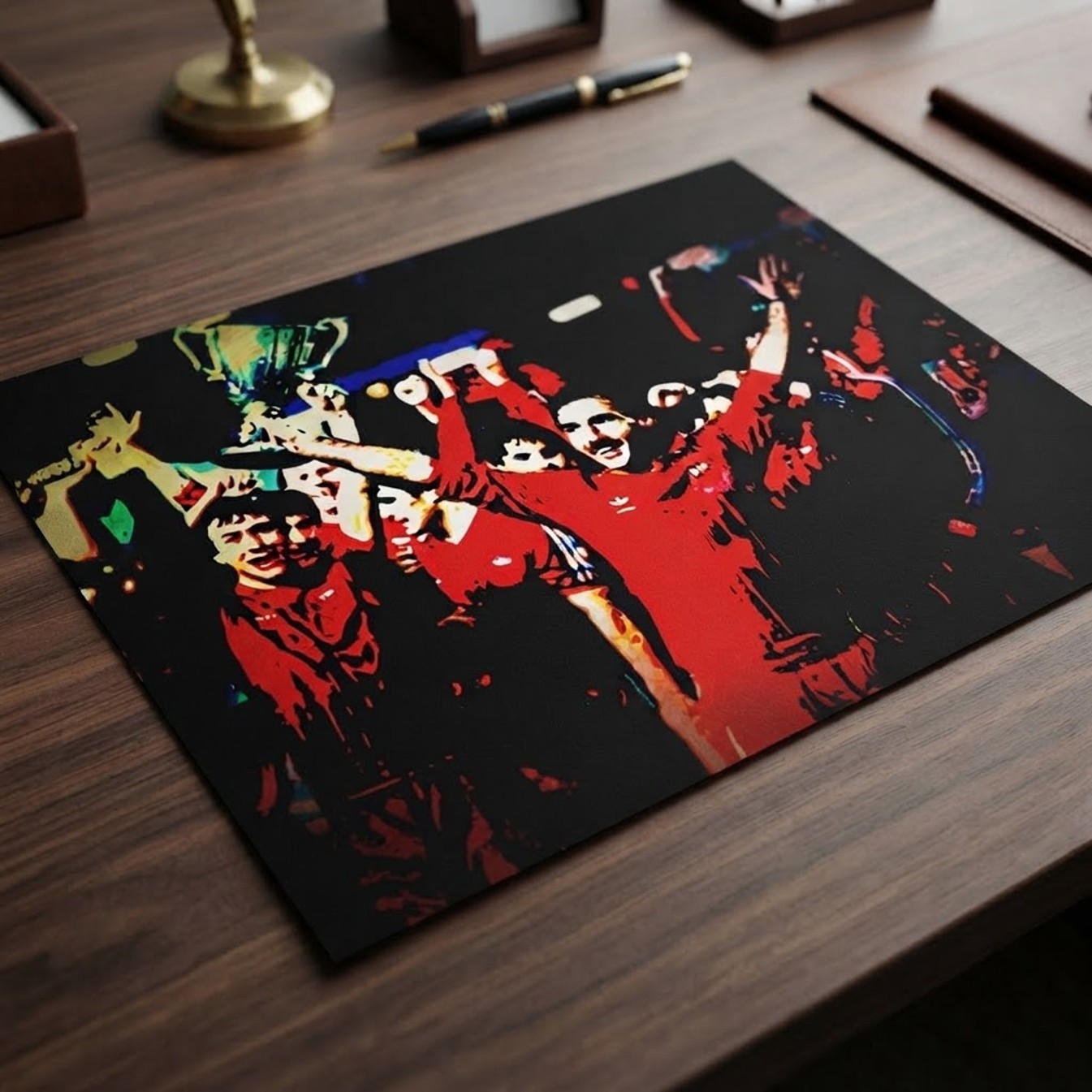
Why Aberdeen's 1983 Victory Was So Remarkable
The significance of the victory is difficult to overstate.
Aberdeen had defeated Real Madrid in a major European final despite being regarded as outsiders before the match.
They had also reached the final after eliminating a succession of highly respected European opponents.
The journey included Sion, Dinamo Tirana, Lech Poznań, Bayern Munich and Waterschei.
It was not a fortunate route through an easy competition.
Aberdeen repeatedly had to prove themselves.
And they did so with a combination of tactical discipline, physical strength, technical quality and extraordinary team spirit.
That was the essence of Ferguson's Aberdeen.
The Players Behind Gothenburg 1983
The 1983 Aberdeen team contained many players who would become legendary figures in the club's history.
Jim Leighton provided security in goal.
Willie Miller was the inspirational captain and defensive leader.
Alex McLeish became a hugely important figure at the heart of the defence.
Gordon Strachan supplied creativity and energy from midfield.
Neil Simpson, Neale Cooper, Peter Weir and Mark McGhee all played major roles during Aberdeen's remarkable rise.
Eric Black's early goal in Gothenburg put Aberdeen in front.
But it was John Hewitt, arriving from the bench, who supplied the moment that would live forever in Aberdeen folklore.
And overseeing the entire operation was Alex Ferguson.
At the time, he was simply Aberdeen's manager.
History would later recognise him as one of football's greatest managers.
The Red Army's Journey to Gothenburg
The Aberdeen supporters played their part too.
Thousands of fans travelled from the north-east of Scotland to Sweden for the final.
They travelled by plane, road and sea, with supporters determined to be there for what was already a historic occasion.
The travelling support became an important part of the story of Gothenburg.
For Aberdeen, the victory was not simply about a football team lifting a trophy.
It was about a city coming together.
The celebrations that followed the final became legendary, with huge crowds turning out to welcome the European champions home.
Gothenburg became more than the location of a football match.
It became a symbol of what Aberdeen could achieve.
Aberdeen's European Success Continued
Winning the European Cup Winners’ Cup was not the end of Aberdeen's remarkable European story.
Later in 1983, the Dons went on to face Hamburg in the European Super Cup.
After a goalless first leg in Germany, Aberdeen won the second leg 2–0 at Pittodrie, with goals from Neil Simpson and Mark McGhee.
That victory made Aberdeen the first Scottish club to win two European trophies.
It remains one of the most extraordinary achievements in the history of Scottish club football.
The European Cup Winners’ Cup triumph had therefore been the beginning of an even greater period of success rather than an isolated moment.
Why Gothenburg 1983 Still Matters to Aberdeen Fans
More than four decades later, the 1983 European Cup Winners’ Cup final remains one of the defining moments in Aberdeen Football Club history.
For supporters who witnessed it, the memories are personal.
For younger generations, the story has been passed down through families, photographs, programmes, memorabilia and stories of the legendary Red Army.
The names remain instantly recognisable:
Ferguson. Miller. Strachan. McLeish. Black. McGhee. Hewitt.
And one word continues to bring it all back:
Gothenburg.
It represents ambition, togetherness and the belief that football does not always follow the script.
That is precisely why the story continues to inspire football artwork, retro designs and fan gifts today.
Aberdeen-Inspired Football Art & Gifts
If the story of Aberdeen's unforgettable European triumph has a special place in your football memories, you can explore the Aberdeen-inspired art, gifts and clothing range from Football Art Online.
Explore the Aberdeen-Inspired Art, Gifts & Clothing Collection
The collection is designed for supporters who love the history, atmosphere and culture surrounding Aberdeen Football Club and iconic moments such as the legendary 1983 Gothenburg triumph.
From football-inspired artwork and gifts to fan-friendly clothing and accessories, it offers a different way to celebrate the memories associated with one of the greatest achievements in Aberdeen's history.
If you're searching for Aberdeen football gifts, Aberdeen-inspired gifts, retro Aberdeen football artwork, Aberdeen fan presents or football-themed wall art inspired by memorable moments from the beautiful game, the collection is well worth exploring.
For more football artwork, gifts, clothing and fan-inspired designs covering clubs, players, iconic matches and football culture from across the game, visit Football Art Online.
The Legacy of Aberdeen's Greatest European Night
The 1983 European Cup Winners’ Cup final was much more than a 2–1 scoreline.
It was the culmination of years of work under Alex Ferguson.
It was the reward for a team that refused to be intimidated by bigger names and bigger reputations.
It was a triumph for the players who had travelled across Europe believing they belonged at the highest level.
And it was a moment of immense pride for Aberdeen and its supporters.
On that wet May night in Gothenburg, Aberdeen did something that seemed almost impossible.
They beat Real Madrid.
Eric Black scored first.
Juanito equalised.
And then John Hewitt rose to meet Mark McGhee's cross in extra time.
The ball hit the net.
Aberdeen were European champions.
For supporters of the Dons, Gothenburg 1983 will always be more than a football match.
It is a story of belief, determination, teamwork and one unforgettable night when Aberdeen conquered Europe.
Aberdeen 2–1 Real Madrid.
European Cup Winners’ Cup winners, 1983.
A football memory that will never fade.

Thank you for posting your blog comment. It will be reviewed and set live soon. If you provided your email then you will be notified of replies to this comment.