
Roker Park Sunderland: The History of Sunderland AFC’s Legendary Old Ground
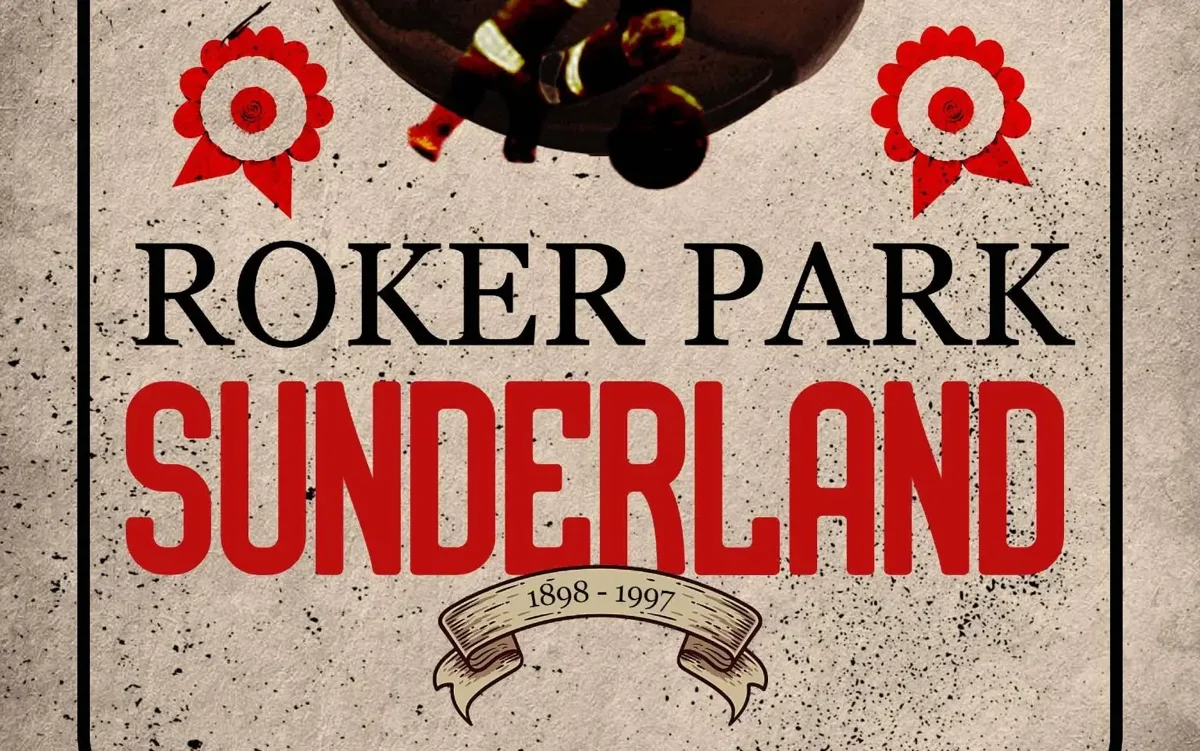
Roker Park: Remembering Sunderland AFC’s Legendary Former Home
There are football stadiums that are simply places where matches were played.
And then there are grounds that become part of a club’s identity.
For generations of Sunderland supporters, Roker Park was much more than a football ground. It was where families and friends gathered, where great Sunderland teams were watched, where enormous crowds created unforgettable atmospheres and where countless football memories were made.
For almost a century, Roker Park stood at the heart of Sunderland football.
Although the stadium disappeared more than 25 years ago, its name still carries enormous meaning for supporters who remember standing on its terraces, watching Sunderland under the floodlights and experiencing the unique atmosphere of one of English football's most famous old grounds.
Today, Roker Park remains an important part of Sunderland football history — and its story deserves to be remembered.
When Did Sunderland Move to Roker Park?
Roker Park officially opened on 10 September 1898, replacing Sunderland's previous home at Newcastle Road.
The move came during a period when Sunderland AFC was rapidly establishing itself as one of the major clubs in English football. Newcastle Road was becoming increasingly unsuitable for the crowds Sunderland could attract, so a new home was needed.
Roker Park provided exactly that.
The first match at the new ground was a friendly against Liverpool, with Sunderland winning 1–0.
Nobody could have known it at the time, but Roker Park would go on to become Sunderland's home for an extraordinary 99 years.
For generations of supporters, the name Roker Park would become almost synonymous with Sunderland AFC itself.
And when people today search for the history of Roker Park Sunderland, they're not simply looking for dates and statistics.
They're looking for memories.
Roker Park and the Great Sunderland Crowds
One of the most remarkable things about Roker Park was the sheer scale of the crowds it could accommodate.
The stadium developed considerably throughout the first half of the twentieth century, eventually reaching a capacity of around 60,000.
And Sunderland supporters certainly knew how to fill it.
On 8 March 1933, Sunderland faced Derby County in an FA Cup sixth-round replay at Roker Park.
The official attendance was an incredible 75,118 — the largest crowd ever recorded at the stadium.
Sunderland won 1–0.
Just imagine the atmosphere.
More than 75,000 people packed into one football ground, all watching the same match and willing Sunderland towards victory.
This is one of the reasons Roker Park nostalgia remains so powerful.
Modern football stadiums can be spectacular, but old grounds had their own character. The terraces were different. The architecture was different. The relationship between supporters and the pitch felt different.
Every old ground had a personality.
Roker Park certainly had one.
The Famous Roker End
For generations of Sunderland supporters, particular areas of the stadium became famous in their own right.
The Roker End was perhaps the most recognisable.
The stadium evolved considerably throughout its history, with stands and terraces being altered, rebuilt and improved as football changed and Sunderland's requirements developed.
The Fulwell End was another famous part of the ground and became particularly associated with Sunderland's passionate support.
Roker Park wasn't a perfectly uniform modern stadium. It was something that had grown and evolved over decades.
That mixture of terraces, stands, covered areas and distinctive architectural features gave the ground its character.
It is precisely this character that makes old Sunderland football grounds so fascinating to football historians, collectors and supporters who remember the era.
Roker Park and the 1973 FA Cup Heroes
Ask Sunderland supporters about the greatest moments in the club's history and sooner or later the conversation will turn to 1973.
Bob Stokoe's Sunderland were playing in the Second Division when they embarked on one of the most remarkable FA Cup runs in English football history.
And Roker Park played a major role in that incredible journey.
After drawing 2–2 with Manchester City at Maine Road, Sunderland returned home for the replay.
On 27 February 1973, more than 51,000 supporters packed into Roker Park to watch Sunderland produce a stunning 3–1 victory.
Billy Hughes scored twice, while Vic Halom also found the net.
The atmosphere must have been extraordinary.
Sunderland then faced Luton Town in the quarter-final and once again produced a memorable performance at Roker Park, winning 2–0 in front of another enormous crowd.
The dream was becoming a reality.
Sunderland reached Wembley.
On 5 May 1973, the club defeated Leeds United 1–0 in the FA Cup Final, with Ian Porterfield scoring the famous winning goal.
Jimmy Montgomery's remarkable double save also became one of the defining moments of that historic final.
For Sunderland supporters, the 1973 FA Cup triumph remains one of the defining chapters in the club's history.
And Roker Park was where much of that incredible journey unfolded.
Roker Park and the 1966 World Cup
Roker Park wasn't only significant to Sunderland AFC.
The stadium also became part of World Cup history.
During the 1966 FIFA World Cup, Roker Park hosted four matches, including the quarter-final between the Soviet Union and Hungary.
The tournament brought some of the world's finest players to Sunderland, giving the city's famous football ground an international stage.
The stadium was also improved ahead of the tournament, helping it meet the requirements of one of the biggest sporting events ever staged in England.
For Sunderland supporters, this adds another fascinating chapter to the story of their old home.
Roker Park wasn't simply a famous club ground.
It was also a World Cup venue.

The Final Years of Roker Park
Football changed dramatically during the final decades of Roker Park's existence.
Following the Taylor Report and the move towards all-seater stadiums, the capacity of many traditional English grounds was significantly reduced.
Roker Park was no exception.
By its final years, the stadium could accommodate around 22,500 supporters.
There were also practical problems.
The ground was surrounded by residential areas, making significant expansion difficult. Meanwhile, football was entering a new era, with clubs investing in modern all-seater stadiums and improved facilities.
Eventually, Sunderland made the decision to leave their historic home.
The final Sunderland match at Roker Park took place in May 1997, bringing an extraordinary 99-year chapter of Sunderland football history to an end.
The club subsequently moved to the newly constructed Stadium of Light.
Roker Park was demolished the following year.
For many supporters, however, leaving the stadium didn't mean leaving its memories behind.
Why Roker Park Still Matters
Old football grounds have a strange ability to remain alive in people's memories.
A photograph can bring back the view from a particular terrace.
An old programme can recall a famous match.
A shirt can transport someone straight back to their childhood.
And sometimes, a simple piece of football memorabilia bearing the name of an old ground can bring decades of memories flooding back.
That's part of the inspiration behind our Sunderland-inspired football art, gifts and clothing collection here at Football Art Online.
The collection celebrates different aspects of Sunderland's football identity, including designs inspired by players, classic football culture, the club's colours and the city's sporting heritage.
Remembering Roker Park
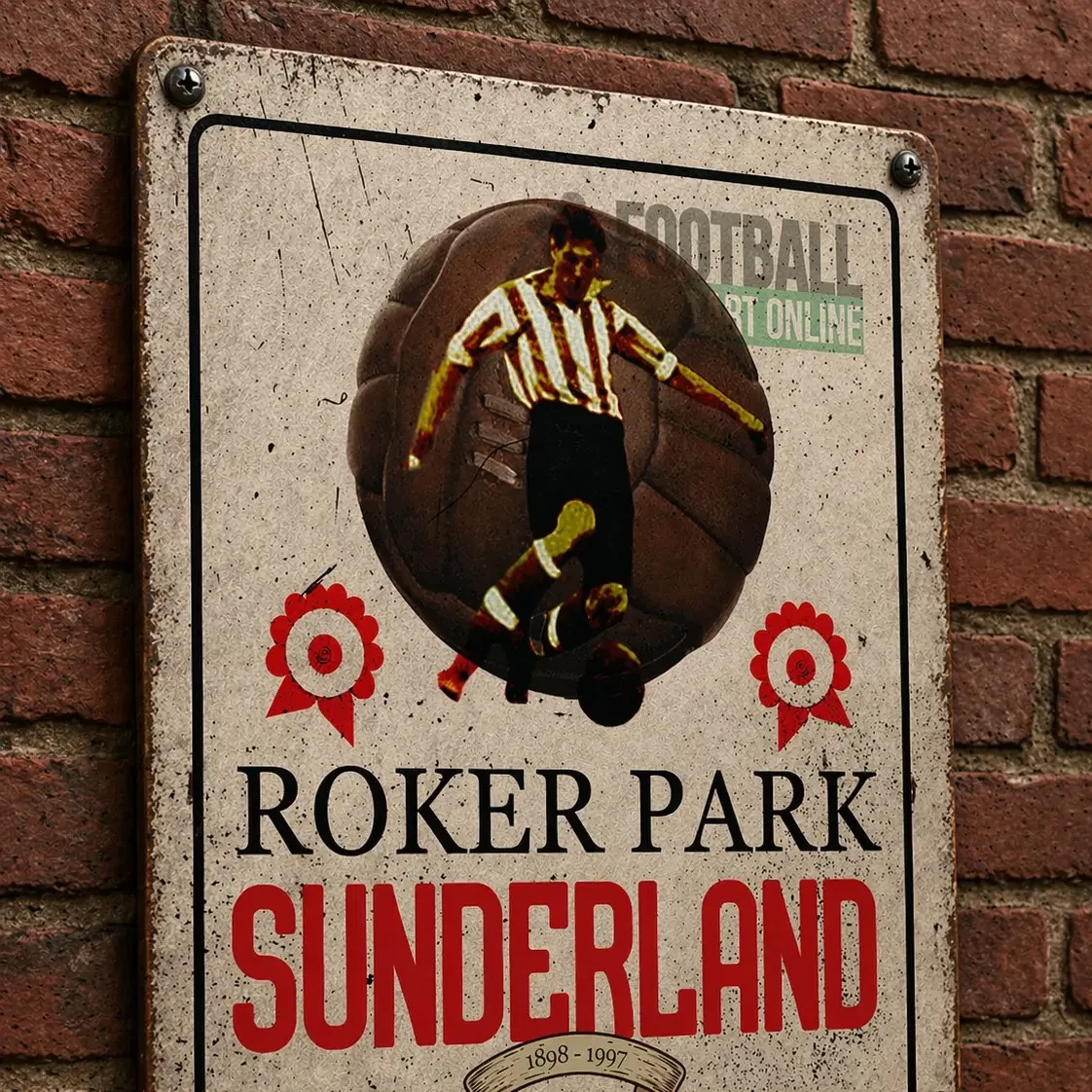
We've also created a Roker Park vintage metal wall sign for supporters who want a nostalgic reminder of Sunderland's legendary former home.
Designed in a vintage-inspired style, it's ideal for a football room, home office, games room, fan cave or anywhere a Sunderland supporter wants to celebrate the history of the club.
It's only a small piece of wall décor.
But the story behind those two words — ROKER PARK — is enormous.
A Football Ground That Will Never Really Disappear
Roker Park may have disappeared physically, but its place in Sunderland football history is secure.
From the enormous crowds of the 1930s to the drama of the 1973 FA Cup run, from World Cup football in 1966 to the emotional final years before Sunderland moved to the Stadium of Light, the ground witnessed generations of football.
It saw heroes emerge.
It saw heartbreaking defeats.
It saw unforgettable celebrations.
It saw children arrive at their first football match and supporters return week after week, year after year.
Most importantly, it gave generations of Sunderland supporters somewhere to belong.
That's why Roker Park isn't simply an old football stadium.
For those who remember it, it is a collection of sounds, faces, matches, terraces, songs and memories.
And for younger Sunderland supporters who never had the opportunity to stand inside it, the stories and photographs provide a fascinating glimpse into what made Sunderland's historic Roker Park so special.
Football moves on.
Stadiums change.
Players come and go.
But some grounds become part of a club's soul.
Roker Park is one of them. ⚽🔴⚪
Please note: Football Art Online's Sunderland designs are independently created and inspired by Sunderland, its history and football culture. They are not official or endorsed Sunderland AFC merchandise.


Thank you for posting your blog comment. It will be reviewed and set live soon. If you provided your email then you will be notified of replies to this comment.